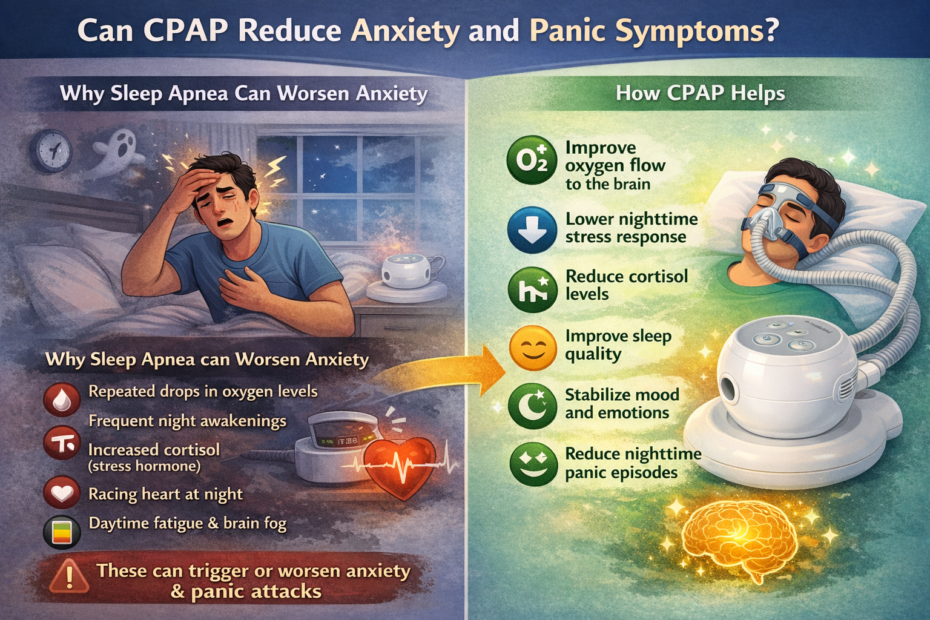
When we feel anxious or panic at times, it’s a sudden bodily reaction with racing thoughts, sudden fear, chest tightness, and an overwhelming feeling. While many people consider it due to trauma, stress, or lifestyle triggers, they overlook poor sleep quality. Yes, you read that right! Untreated sleep apnea that causes sleep disturbances has a strong association with anxiety and panic disorders. But the good news is that it’s manageable with consistent CPAP therapy.
In this article, we will discuss how CPAP therapy can assist in reducing anxiety and panic symptoms. Plus, you’ll learn how to choose the right CPAP device that can make a significant impact.
The Hidden Link Between Sleep Apnea and Anxiety
People with untreated sleep apnea tend to have higher rates of both generalised anxiety and panic attack disorders. They also experience increased levels of irritability and mood instability.
Sleep Apnea occurs due to breathing interruptions while sleeping, usually dozens of times in an hour. No matter how long someone has suffered from sleep apnea, their brain will perceive this nightly cycle of sleeplessness from the body as causing greater stress over time.
With each drop in oxygen level, the sympathetic nervous system (similar to the ‘fight or flight’ reaction) is activated, leading to the elevation of cortisol levels in the blood. Therefore, people with untreated sleep apnea report higher rates of generalized anxiety, panic attacks, irritability, and mood instability.
How CPAP Therapy Helps Calm the Nervous System
A CPAP machine delivers consistent positive pressure to your airways at night to keep your airways open for breathing. This simple but very effective approach will prevent your airways from closing and keep them open, stabilizing your blood oxygen levels, and helping your brain progress through the normal stages of sleep. As your ability to get into a deeper, uninterrupted state of sleep increases, a number of important changes will occur that have a direct impact on anxiety.
- Less Night Time Stress Response: With constant CPAP therapy, your body will no longer have multiple “little panic attacks” due to lack of oxygen during the night.
- Lower Hormone Levels: Regular CPAP therapy maintains a normal blood oxygen level during sleep, and your hormones, including stress hormones, will stabilize.
- Improved Emotional Regulation: Your ability to manage fear and emotion will improve due to your CPAP promoting restorative sleep. Your brain will also contain more synapses to control fear and emotion.
- Fewer Physical Panic Trigger Symptoms: You will have improved oxygen levels while using CPAP. This reduces the occurrence of heart palpitations, dizziness, and shortness of breath, which people often mistake for an anxiety attack.
Many CPAP users will experience feelings of calm within a month or two after starting CPAP therapy. As a result, they observe a significant reduction in panic attacks and improved emotional stability.
CPAP and Panic Attacks: Breaking the Cycle
Bodily sensations, like rapid heart, tight chest, and breathlessness, play a major role in panic attacks. Sadly, many of these same sensations are experienced by people who suffer from sleep apnea. It usually occurs during the night or early morning hours.
When the underlying condition of sleep apnea is treated using CPAP therapy, it helps to eliminate the cycle of panic attack triggers. It gives the body a chance to adapt to normal breathing. Once the body is trained to use normal breathing patterns during sleep, the person’s brain recognizes that the body is not “under attack.” This contributes to reducing hypervigilance, thereby minimising chances of having panic attacks during the day.
Sleep specialists see an improvement in mental health in people who were previously diagnosed with ‘pure anxiety,’ when the underlying issue was disrupted breathing while sleeping.
Transcend Micro: A Portable CPAP Designed for Peace of Mind
The Transcend Micro provides an ideal solution for those suffering from both anxiety and sleep apnea. The design focuses on comfort, ease-of-use, and reassurance. These key factors lead to achieving consistent CPAP use.
Reasons to choose the Transcend Micro:
- Ultra-compact design: Weighing just 218g and measuring only 9.1cm in diameter, the device is one of the smallest CPAP devices on the market.
- Quiet operation: WhisperSoft Muffler helps in reducing the machine noise. So, it reduces sleep disturbances and creates a calm environment for sleeping for the user and their companion.
- Consistent pressure delivery: A stable airflow provides a consistent level of pressure during sleep. This prevents the feelings of panic that develop from sudden breathing changes.
- Travel-friendly: Perfect for frequent travellers or anxious sleepers who have difficulty sleeping away from home.
- Easy to set up: Fewer components make the unit easier to set up, especially for new users.
Anyone seeking a CPAP machine for sale should consider the Transcend Micro for its clinical and psychological effectiveness. This is particularly important for those experiencing anxiety during their sleep.
Conclusion:
Although CPAP does not substitute therapy or medications, it can have a significant impact on decreasing anxiety/panic related to obstructive sleep apnea. It does so by restoring oxygen levels, relaxing the nervous system, and enhancing sleep quality.
When searching for a CPAP machine Australia, find trusted providers, like Transcend Micro, that recognise the importance of mental health and sleep health. Transcend Micro’s innovative solutions attractively present users with an opportunity to improve their sleep quality and reduce stress quickly and easily compared to previous options available on the market.